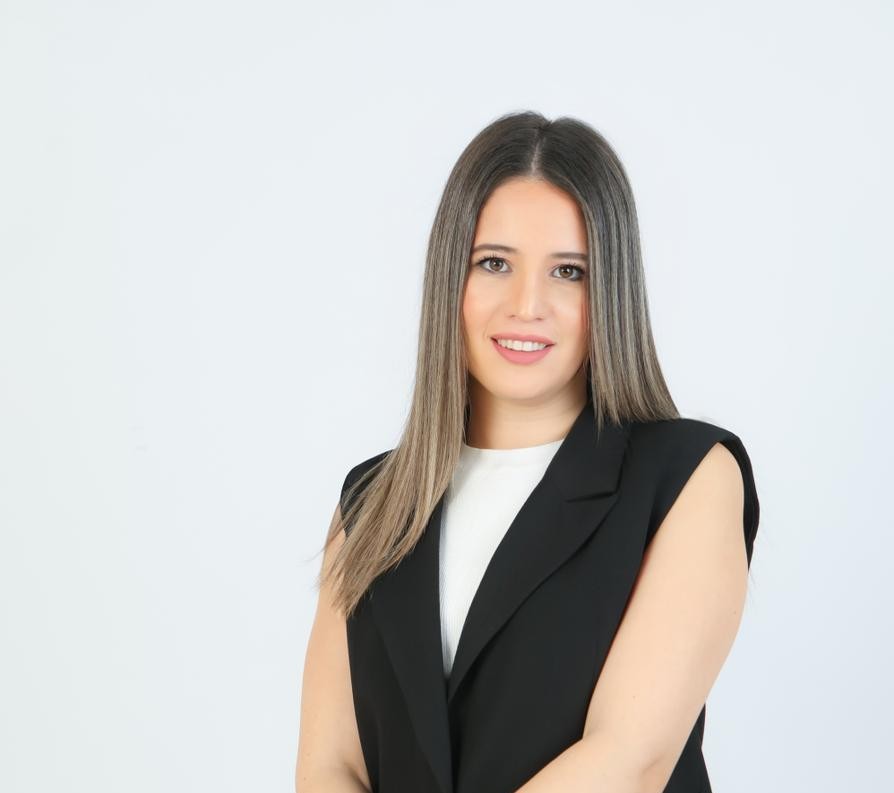
APO Group (www.APO-opa.com), the leading multi-award-winning pan-African communications consultancy and press release distribution service, is pleased to announce the promotion of Malika Bouayad to Group Account Director, in the company’s Public Relations&Strategic Communications division. This appointment, effective 1 December 2025, reflects APO Group’s commitment to developing strong African talent and enhancing its delivery of world-class communications support to clients across the continent and beyond.
Born and raised in Morocco, Malika brings close to a decade of experience in communications, marketing, and stakeholder engagement across diverse sectors. Fluent in English, Arabic, and French, she holds both a bachelor’s degree and an MBA from Al Akhawayn University in Ifrane.
Since joining APO Group in 2022, Malika has played a pivotal role in delivering award-winning campaigns. She has spearheaded major media programmes for global events, including three consecutive editions of GITEX Global and GITEX Africa, managing African and international media with precision and excellence. She has also led local media engagement in Morocco for high-profile clients such as Basketball Africa League (BAL) and Canon and contributed to strategic communications work for organisations including APIX and the International Olympic Committee (IOC).
In her new role, Malika will be responsible for both strategic client leadership and operational delivery excellence. She will lead high-level client engagements, oversee quality assurance and commercial alignment, and ensure that all client programmes are strategically aligned, operationally sound, resource-optimised, and delivered to the highest standard. She will also play a key role in streamlining delivery operations across the team.
Commenting on the promotion, APO Group CEO, Bas Wijne, said: “Malika embodies the professionalism, creativity, and strategic insight that define APO Group’s work across Africa. She has consistently delivered exceptional results for our clients and has become a trusted partner to senior leaders across the continent. Her promotion is a natural next step and a testament to her dedication, leadership, and passion for Africa’s development. We are proud to see her take on this expanded role and look forward to all she will achieve.”
“Joining APO Group almost four years ago and growing into the role of Group Account Director has shown me that our strength lies in our people, our purpose, and a relentless pursuit of excellence. This promotion is not mine alone – it reflects every mentor, colleague, and client who inspires us to push further. I’m energised to lead with integrity, empower our team, and to advance African stories with credibility, creativity, and transformative impact across the continent,” said Malika.
By nurturing outstanding African PR and strategic communications talent, APO Group is delivering on its vision to pioneer the future of communication and serve as the channel for Africa’s voices.
Distributed by APO Group on behalf of APO Group.
Media contact:
marie@apo-opa.com
About APO Group:
Founded in 2007, APO Group (www.APO-opa.com) is the leading award-winning pan-African communications consultancy and press release distribution service. Renowned for our deep-rooted African expertise and expansive global perspective, we specialise in elevating the reputation and brand equity of private and public organisations across Africa. As a trusted partner, our mission is to harness the power of media, crafting bespoke strategies that drive tangible, measurable impact both on the continent and globally.
Our commitment to excellence and innovation has been recognised with multiple prestigious awards, including a PRovoke Media Global SABRE Award and multiple PRovoke Media Africa SABRE Awards. In 2023, we were named the Leading Public Relations Firm Africa and the Leading Pan-African Communications Consultancy Africa in the World Business Outlook Awards, and the Best Public Relations and Media Consultancy of the Year South Africa in 2024 in the same awards. In 2025, Brands Review Magazine acknowledged us as the Leading Communications Consultancy in Africa for the second consecutive year. They also named us the Best PR Agency and the Leading Press Release Distribution Platform in Africa in 2024. Additionally, in 2025, we were honoured with the Gold distinction for Best PR Campaign and Bronze in the Special Event category at the Davos Communications Awards.
APO Group’s esteemed clientele, which includes global giants such as Canon, Nestlé, Western Union, the UNDP, Network International, African Energy Chamber, Mercy Ships, Marriott, Africa’s Business Heroes, and Liquid Intelligent Technologies, reflects our unparalleled ability to navigate the complex African media landscape. With a multicultural team across Africa, we offer unmatched, truly pan-African insights, expertise, and reach across the continent. APO Group is dedicated to reshaping narratives about Africa, challenging stereotypes, and bringing inspiring African stories to global audiences, with our expertise in developing and supporting public relations campaigns worldwide uniquely positioning us to amplify brand messaging, enhance reputations, and connect effectively with target audiences.